
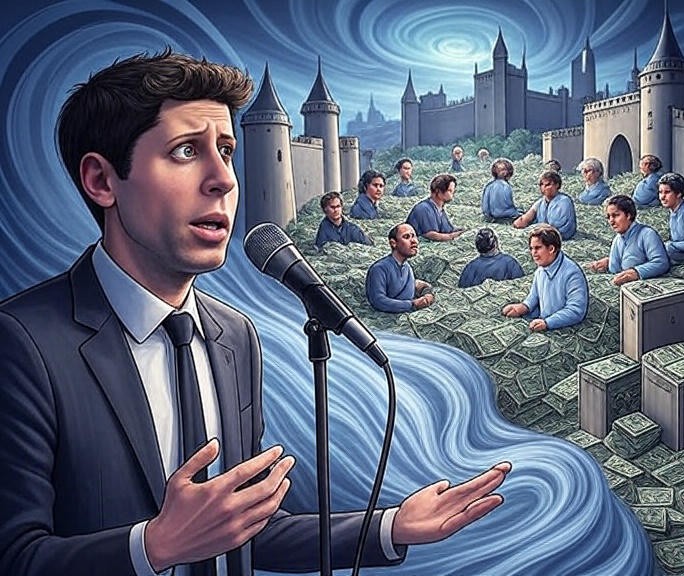

The Sound of Panic
If you’ve ever imagined a future where your bank account is emptied by a soundalike Sam Altman, fret no more. The AI age is here, and its chief evangelist just informed us we should be very, very afraid (again). Crooks, we’re told, will soon be robbing banks by mimicking our dulcet tones with two seconds of TikTok chatter. Grandmas across America are reportedly trembling beside their rotary phones.
Let’s pause the panic and hum a few bars of realism.
Deepfake Déjà Vu: Old Tricks, New Tunes
Yes, AI can now clone voices with disturbing fidelity. Yes, somewhere a poor grandparent has sent bail money to an alleged “grandson” who sounded suspiciously like Siri with a head cold. But here’s the thing: while these tools are unnervingly powerful, the notion that banks are about to crumble under a deepfake blitz is, at best, theatrical.
Banks are not quite the sitting ducks Mr. Altman envisions. Voice verification is a single, rarely solitary, feather in the cap of multi-factor authentication—hardly the master key to every vault. Try even a routine request, like blocking your credit card, and you’ll find the experience oddly reminiscent of high absurdist theatre.
The Spanish Inquisition of Customer Service
Allow me to illustrate with a personal tale. The other week, I had the rather mundane goal of blocking my own credit card (a preemptive strike, not an act of self-sabotage). After being serenaded by muzak, I eventually met the gauntlet of security questions.
- “What was the name of your third-grade teacher’s childhood pet?”
- “Please reproduce, from memory, your high school locker combination, backwards.”
- “Please spell the surname of your first imaginary friend.”
After fifteen minutes gallantly failing to recall whether it was “Sparkles” or “Barkles,” I was ready to beg for an AI impostor. If a voice fake can crack that code, I’ll personally make it President.
Who Guards the Guards?
Altman, ever the industry soothsayer, urges us to see doom. And yet, he artfully dodges mentioning his own industry’s responsibility to shore up the levees. “Someone should fix this,” he says—by which he means, of course, “Not it.” Policymakers and AI vendors pass the talking stick. Banks soldier on with FinTech and layered defenses, most of which are quite adept at separating humans from their soundalikes. Banks’ security teams are, as always, playing an endless chess game with fraudsters. Now with just a glossier set of pawns.
Action, or Just More Talk?
To be fair, banks have seen the fraud apocalypse trotted out before. They adapt. Banks consult with companies developing AI-fraud detection. They cross-pollinate fraud alerts, and, when all else fails, they subject us all to more inquisition than Torquemada could imagine. Meanwhile, regulators twirl their pens and executives issue statements. OpenAI, incidentally, declines to release its most potent voice tools—lest the revolution arrive early.
Conclusion: Please Hold for a Human
Perhaps Altman’s prophecy is half-right. AI voice fraud must be monitored, but the notion of imminent, undetectable robbery is more science fiction than reality. For now, your greatest threat when calling the bank remains not algorithmic impostors. It’s your own inability to recall the security answer you invented twelve years ago at 2 a.m.
The future of fraud will have to wait for us to remember our own secrets.
Sources:
OpenAI’s Sam Altman warns of impending fraud crisis as AI voice cloning tech advances
OpenAI CEO Sam Altman is right and very wrong about AI-faked voices
For more insights about what AI can or cannot do, check out my book “Artificial Stupelligence: The Hilarious Truth About AI”:


