
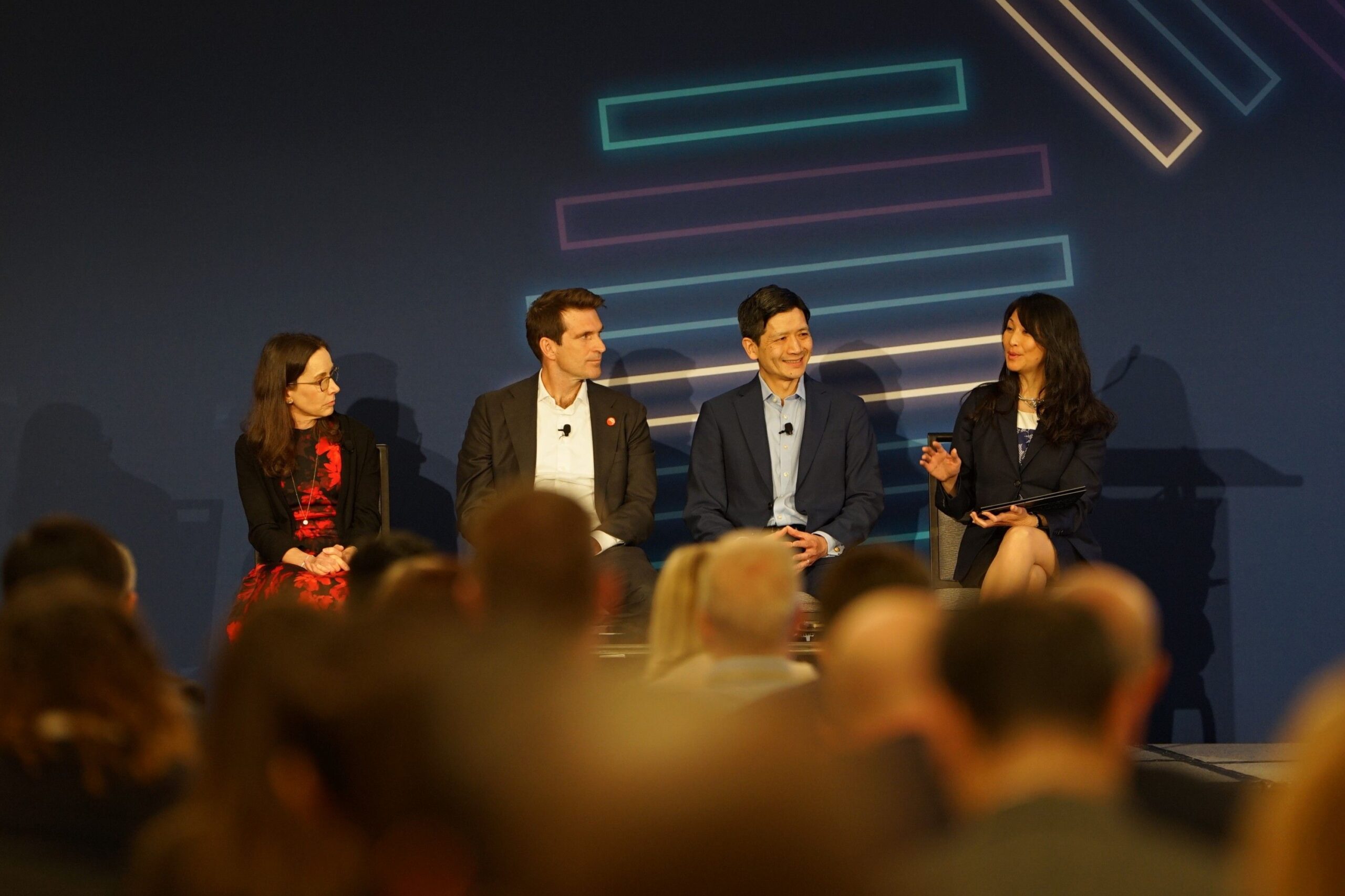

The CFA Institute LIVE 2025 panel “Future-Proof Investments: AI and ML for Tomorrow’s Market” brought together a power panel of experts in the field to discuss the real opportunities and risks of using artificial intelligence in finance. As moderator, I had the pleasure of steering the conversation away from the usual AI hype and toward practical insights that actually matter when you’re trying to future-proof investments.
Start With the Problem, Not the Hype
The unanimous advice from our panel: Always start with the problem you’re solving. Don’t let the allure of AI-powered everything distract you from the basics. Define your challenge, pick the right tools, and – crucially – decide how much accuracy you actually need. Because, as it turns out, not every workflow in finance needs to be as precise as a Swiss watch. Some can afford to be more like a sundial on a cloudy day.
Why AI Is Not Your Robo-Oracle
Here’s the catch: Generative AI, especially large language models (LLMs), are probabilistic by nature. They generate responses based on statistical likelihood, not on a secret stash of financial wisdom. In other words, LLMs are glorified autocomplete machines-think of them as interns who are very confident but occasionally hallucinate entire market trends out of thin air.
This probabilistic approach means that consistency is a challenge. LLMs don’t always give you the same answer twice, and sometimes they’ll confidently invent facts, figures, or the next big meme stock. That’s why you should only use AI for tasks where 100% accuracy is not required. If you’re looking for future-proof investments, remember: AI is great at summarizing, not so great at running your payroll.
Where AI Shines (and Where It Should Never Be Left Alone)
Workflows that do NOT require 100% accuracy:
- Summarizing earnings calls (bonus points if you enjoy creative interpretations of “synergy”)
- Drafting research reports
- Parsing news articles
- Initial client communications
- Market sentiment analysis
- Social media monitoring
Workflows that DO require 100% accuracy (and should be AI-free zones):
- Automated trading (unless you want your portfolio to moonwalk off a cliff)
- Payment processing
- Regulatory compliance checks
- Tax calculations
- Final approval of wire transfers
If the workflow could end with a call from the SEC or your CFO in tears, maybe keep the GenAI on a short leash.
Making GenAI Less of a Wild Card
How do you tame the probabilistic beast?
- Verified data sources: Point your LLMs to reliable, up-to-date data, not the financial equivalent of Wikipedia’s “fun facts” page.
- Fine-tuning: Train your models on relevant, high-quality financial data.
- Human oversight: Because nothing says future-proof investments like a human double-checking the AI’s creative outputs.
Can GenAI Generate Alpha, or Just Heartburn?
The panel also tackled the million-dollar question: Can generative AI actually help you generate alpha? The answer: maybe, but don’t bet the farm. AI can help uncover subtle market patterns and process information at scale, but if everyone uses the same models, the risk of herding and systemic shocks increases. In other words, GenAI can be both an alpha generator and a systemic risk amplifier – sometimes on the same trading day.
Recent research highlights that while AI-driven strategies can create short-term advantages, they also have the potential to magnify market volatility if widely adopted without proper safeguards. Herding behavior among AI models, especially those trained on similar data, can lead to flash crashes and liquidity crunches, proving that sometimes, the only thing AI amplifies is collective panic.
The Bottom Line
If you’re serious about future-proof investments, remember:
- Use GenAI where “close enough” is good enough.
- Keep it away from anything that could bankrupt you before lunch.
- And always, always double-check its work – unless you enjoy explaining to your board why your trading bot just invested in DogeCoin.
Because in the world of AI-powered finance, the best investment is still a healthy dose of skepticism – and maybe a backup abacus, just in case.
If you want the inside scoop on AI’s brilliance and blunders in finance and beyond, don’t miss my new book, Artificial Stupelligence: The Hilarious Truth About AI – your field guide to surviving the AI revolution with your sanity (and portfolio) intact.


